BLOG
Reduce Schedule Risk With Our Subassembly Services
At Focused on Machining, we’re proud of the precision machining we perform every day. But we know that for prime contractors and aerospace OEMs, excellent parts are only part of the equation. When a program requires multiple components, certified hardware, outside processing, and assembly, coordination can be just as difficult. That’s why our subassembly services are such a critical capability. We send you a complete subassembly that’s ready for the next step, with the documentation that shows it.
Why “Complete” Simplifies Life for Primes
Our goal is to take as much of that workload off your plate as we can. When we deliver a complete subassembly, you reduce vendor logistics and eliminate a variety of tasks from your project.
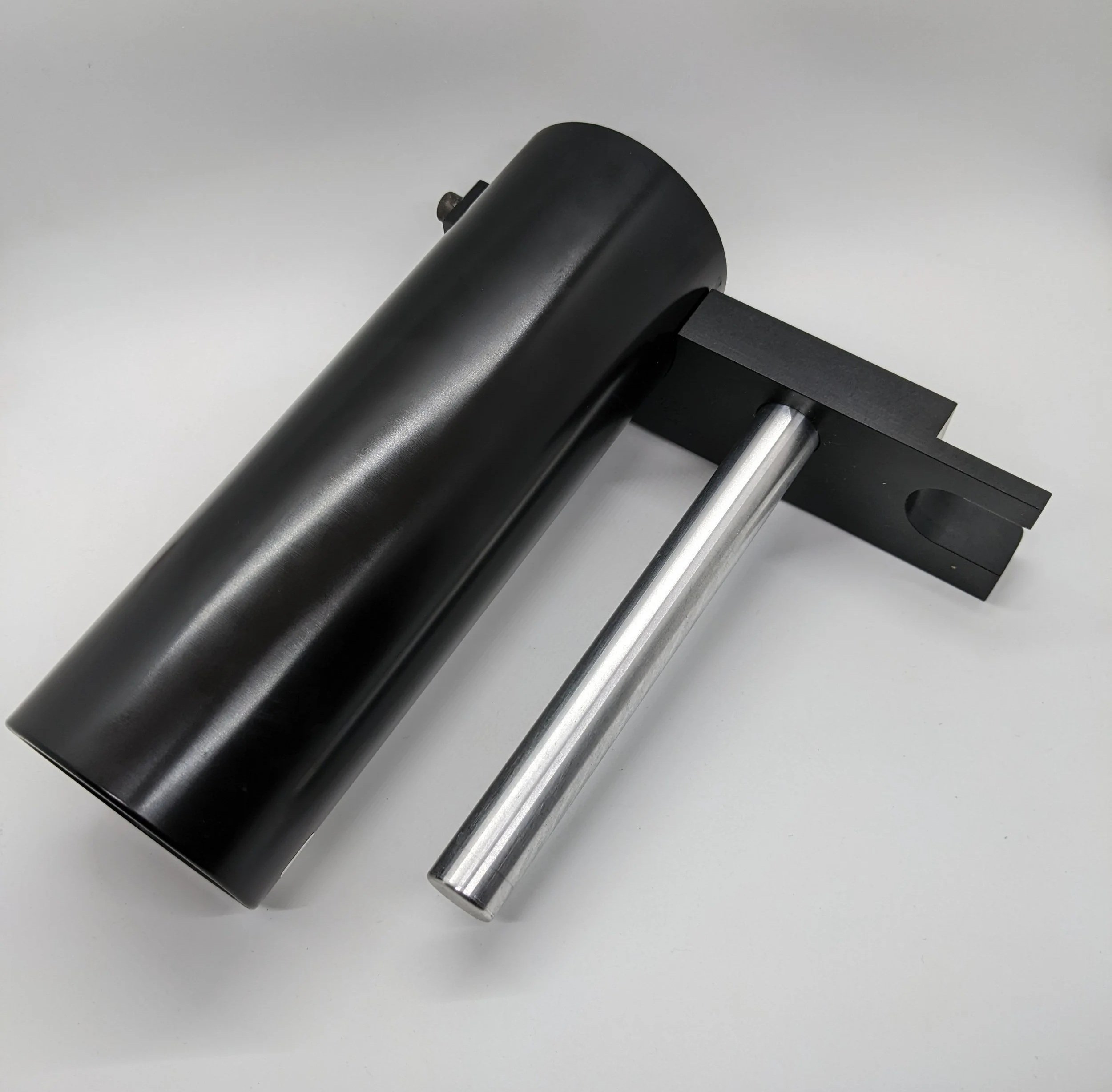
Here’s a typical scenario: one of our current aerospace projects requires six different machined parts that are ultimately assembled. As a result, aerospace machining is only part of the job. It also includes tasks like sourcing hardware certified to aerospace standards, pressing alignment pins, installing threaded inserts, delicate assembly, and completing the certification package.
Because of our experience in subassembly services and our history as an AS9100 machine shop, these steps are relatively straightforward for our team. We’re set up to not only carefully assemble your products, but also procure certified hardware cost-effectively and maintain organized documentation. In the end, the subassembly can ship as a single delivery.
For a prime contractor or aerospace OEM, this creates significant time savings. Instead of diverting skilled resources to manage assembly or vendors, your team can stay focused on higher-value work.
Vendor Management Without the Risk
Of course, nearly every machine shop has to outsource some finishing and special processes as part of their workflow. But we manage those vendors on your behalf to simplify your logistics.
We have a large and trusted vendor network. And if your program requires an approved supplier list, we have extensive experience operating from those lists. But we also evaluate the vendors on your list ourselves, in some cases even visiting them to see their processes in person and determine where their strengths lie. By knowing which vendors to trust for which steps, we minimize a major risk of delay. And we believe that reduced timeline risk is a major benefit of our subassembly services.
Scheduling Discipline to Protect Delivery
A complete subassembly only simplifies your project if it arrives when you need it. That’s why we pay such close attention to our scheduling to keep projects on time.
We track each step in our ProShop ERP and schedule every process carefully, building in time for unexpected delays or complications. If a project begins to slip behind, we know weeks or months ahead of time because of our detailed scheduling.
When that happens, we don’t wait until the end of the job to inform you. We review options internally around scheduling and expedites, and if a risk remains, we communicate it early to collaborate on possible solutions.
Request a Quote for Subassembly Services
Complete subassemblies not only simplify your workflow and free time for high-value activities, but they also help you manage risk to your timeline if you choose the right manufacturing partner. If you’re looking for a partner that combines precision manufacturing, assembly capability, and vendor coordination, we’re ready to deliver on time.
Contact us today to discuss your next project with our Colorado machine shop!
Reliable 5-Axis Machining Services for Prime Contractors
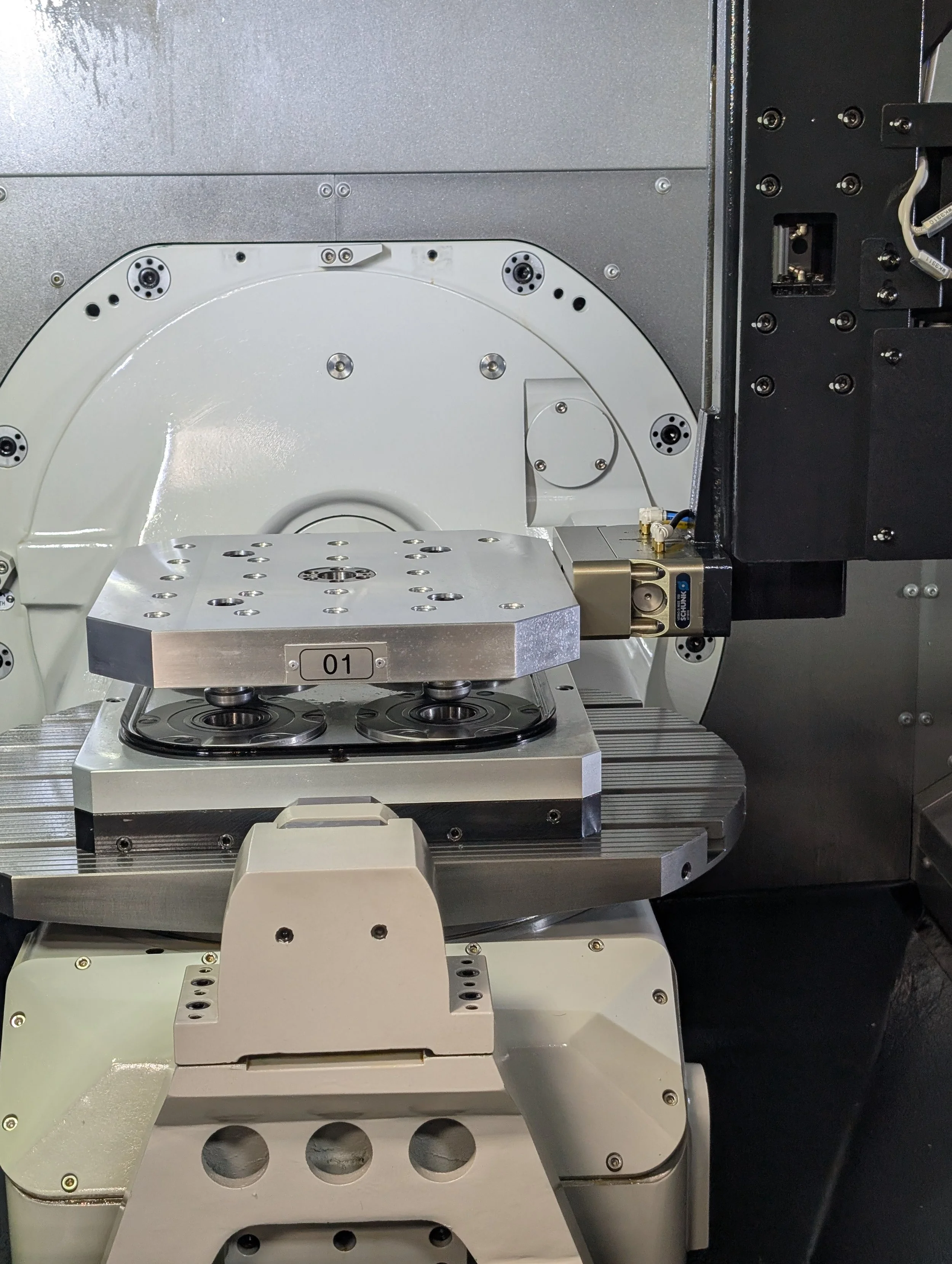
At Focused on Machining, our 5-axis machining services and advanced scheduling allow us to expertly support prime contractors. We take on-time delivery performance seriously as your manufacturing partner because we know one late supplier can derail an entire production line. Currently, our on-time delivery rating sits at 95%.
Our 5-axis machining enables us to machine complex parts and serves as part of a larger system designed to reduce your risk and compress timelines.
5-Axis Machining: Complex Parts With Less Risk
5-axis machining is well known for handling complex geometry and features, but consistency is just as important for prime contractors. After all, many complex parts can be produced on 3-axis equipment, but the 3-axis option requires more setups and fixturing, introducing more chances for error.
Consider a part with multiple datums and a tight-tolerance hole that has to be located precisely relative to all of them. 3-axis equipment can achieve that result, but it depends on an expert machinist perfectly executing several flawless setups. Every additional setup introduces new risk.
With 5-axis machining, that same job can be completed in a single setup. Fewer setups mean better positional accuracy and a more repeatable process. That, in turn, will lead to fewer surprises during inspection and an overall more stable production and precision machining process.
Speed Scales With Automation
Speed is important in every industry, but for prime contractors, the large programs they often manage can make speed and reliability critical. Instead of waiting for a single order, you’re keeping a huge number of tasks on track.
Our five-axis not only reduces setup time, but it allows for extended runtime and lights-out operation, as well. That efficiency helps us protect lead times even when schedules get tight. The additional capacity also helps us adjust when the unexpected occurs, preventing disruption for your project and making us a perfect partner for contract manufacturing services.
A Process for Reliability in Every Step
When machine shops struggle with late deliveries, it’s rarely from any single mistake. Instead, they come from systemic process issues: no buffer for uncertainty, limited visibility in a schedule, and no technology to help recover from setbacks. If shops can’t recognize a problem until the due date arrives, you might be facing weeks or months until delivery.
We never want to put a customer in that position at Focused on Machining. We build realistic schedules in ProShop to account for not only the full scope of work but the inevitable bumps that happen in production. The scheduling is updated dynamically, allowing us to spot risks early and communicate with you to find solutions.
Our 95% on-time delivery rating does mean that a small percentage of our jobs ship late, but our process almost always allows us to measure those delays in days, not months. In part, that’s due to the modern equipment, like 5-axis machining, that we’re able to pair with our transparent scheduling technology.
Complexity and Dependability In One Shop
Prime contractors need dependable delivery just as much as they need complex parts, and we’re ready to provide both in our 5-axis machining services. Contact us today and partner with our Colorado machine shop for a low-risk manufacturing partner!

Why Our Credentials Give Prime Contractors Total Confidence
When prime contractors look for a dependable supplier and manufacturing partner, certifications and credentials are key aspects of their search. At Focused on Machining, our “credentials stack” makes us the perfect match for aerospace and defense partners. We’re able to meet rigorous standards and fill critical gaps for primes.
AS9100 Certification
AS9100 is an international quality management standard for aerospace and defense. We have been a certified AS9100 machine shop since 2021. (Note that this also incorporates ISO 9001:2015 certification.)
Achieving and maintaining this certification requires our entire operation to be audited regularly in areas like estimating, production, inspection, customer feedback, and more. We periodically undergo both full audits and surveillance audits. Full audits are particularly in-depth, performed by third-party auditors who scrutinize every detail.
The audits are rigorous, but we wouldn’t have it any other way. With such a challenging process, prime contractors can have confidence knowing our systems and processes meet proven high standards.
ITAR Registration
Focused on Machining is registered with the U.S. Department of State under ITAR (International Traffic in Arms Regulations). ITAR regulations govern how defense-related data is protected, shared, and more.
ITAR registration affects many parts of our daily operations. For instance, we restrict facility access and screen visitors to ensure only U.S. persons enter. (While ITAR does allow processes for non-U.S. persons to obtain access under certain conditions, we have chosen not to pursue that route to keep compliance simple.)
ITAR requirements also flow down to anyone touching controlled data, which means that subcontractors and partners must be compliant if we need to share ITAR-controlled data with them.
Certified Service-Disabled Veteran-Owned Small Business
Focused on Machining is proud to be a certified Service-Disabled Veteran-Owned Small Business (SDVOSB). Our owner, Justin Quinn, served in the U.S. Air Force, and our mission reflects his commitment to supporting the defense sector.
This designation used to require minimal documentation, but recent changes shifted the process, which we have successfully completed. As a result, we now hold a formal SBA certification that we are ready to share.
For customers with set-asides for SDVOSB, we can help you meet those targets while delivering the highest quality CNC machining services.
CMMC Level 2
Focused on Machining is also CMMC Level 2 compliant. We began our journey shortly after the framework was introduced in 2020 to be fully prepared when it first became a requirement.
Both because of our status as a veteran-owned business and our partnership with defense contractors, meeting these cybersecurity requirements has always been a priority. Our compliance reflects our commitment to upholding the highest standards of data security in support of national defense.
A Partner Built for Prime Contractors
Our certifications and credentials reflect our dedication to meeting the needs of our prime partners. When primes choose us, they gain a precision machining partner of the highest caliber capable of meeting your regulatory requirements and supporting your goals.
Request a quote today to partner with our Colorado machine shop!
5 Lessons Learned on Our Journey to CMMC Level 2 Compliance
By Justin Quinn, Owner of Focused on Machining
At Focused on Machining, we are fully prepared to support your CMMC Level 2 projects with our precision machining. But that compliance didn’t happen overnight.
When the CMMC framework was first announced, I knew how essential compliance would be for our customers involved in defense work. And as a veteran, that responsibility is personal to me. I quickly learned, however, that being among the first to tackle this challenge would come with unique challenges.
With the DoD beginning to enforce CMMC requirements, many shops are now facing the journey we’ve completed. To help other CNC machine shops, I want to share several lessons we learned along the way. I’ve also got one important recommendation for OEMs and primes navigating these early days of CMMC.
Why You Need an Experienced Partner
When the Department of Defense introduced the first version of the CMMC program in 2020, we immediately began investigating the certification process. At this time, no IT providers had any meaningful experience with the brand-new requirements, and the framework would continue to evolve for years to come.
Our existing IT provider was transparent about their lack of experience in the area, but they offered to help in any way they could. They had been trustworthy partners on other issues for many years, and I decided to take them up on their offer.
It quickly became clear that it would simply take too long to have a partner who was learning alongside me. I thanked them for their transparency and switched to a new IT company.
Lesson 1: If a partner tells you they’re not ready, it’s best to keep searching.
The Importance of Due Diligence
When we selected our second CMMC IT partner, they presented themselves as having deep CMMC expertise. At that point in time, it was still difficult to validate those types of claims, as everyone was still learning what CMMC would eventually become. With few established benchmarks or references available, we made the best choice we could at the time.
As the relationship continued, I began asking more detailed CMMC questions. Their responses were broad and vague, which made it clear their supposed expertise had just been in pursuit of sales.
Lesson 2: In the early days, it was hard to verify a potential partner’s expertise. Today, you have more available to you. Ask technical, requirement-based questions and request proof of prior CMMC work before choosing a partner.
Don’t Go It Alone
After my first two IT partnerships, I had made some progress on CMMC, but not enough. I briefly decided to handle CMMC myself. I love a challenge, and I’d previously led our certification efforts to become an AS9100 machine shop. I figured if I was intelligent enough to rebuild Air Force engines, I could handle this process.
But CMMC is different. The requirements are dense and technical, and some sections genuinely felt like reading a foreign language. I eventually decided I needed help from professionals.
Lesson 3: As a machine shop owner, you cannot effectively achieve CMMC Level 2 certification alone. Even if you’re strong in IT and have led other certification efforts, it’s simply a different beast.
Find the Right Partner and Work in Phases
At this point, I was committed to finding an experienced partner and doing extensive due diligence. I interviewed multiple firms that were able to provide clear proof of their expertise in CMMC.
Ultimately, I found the right partner in Imprimis in Colorado Springs. Their owner has decades of experience working with the DoD, and the firm specializes in CMMC work. They have been key to our success, and I recommend them to any other Colorado machine shop going through this process.
It’s important to note that, even after finding the right partner, the path to CMMC Level 2 certification is a marathon and not a sprint. Our process has included months of significant work followed by stretches of slower progress due to bottlenecks or reviews. That’s relevant to your expenses too, as some months will have significant costs, while others will be lower.
Lesson 4: Achieving CMMC certification takes place in stages, and it takes time. This structure helps distribute the spending and workload over time, but it also means the process is lengthy. Start early, well before a partner requires you to be certified.
What Primes Need to Know
These lessons have primarily been for other machine shops, but I do have a final message for our customers and primes. In many early CMMC contracts, Level 2 work begins with a self-assessed CMMC Level 2 status rather than a full third-party certification. But shops still must be actively progressing toward full Level 2 certification.
Lesson 5: If a shop says they are “almost done,” ask for proof. They should be able to provide documentation such as their scope outline, POA&M, system security plan, and other materials.
This matters for your supply chain, too. Even though we are compliant, we cannot send controlled documents to downstream vendors if they do not meet the necessary standards.
Moving Forward With Confidence
I’m sharing these lessons because I want to help other shops protect sensitive data and strengthen our national defense. Our journey was full of twists and turns, but we’re proud we achieved CMMC early.
If you are a machine shop owner who has questions, don’t hesitate to contact me.
And if you’re an OEM looking for a CMMC Level 2 manufacturer, request a quote today!

Collaborate on Planning for High-Volume Machining Success
At Focused on Machining, we believe that the strongest manufacturing partnerships are built on trust. When both sides communicate early, it leads to smoother production and better long-term results. And transparency is especially important when you already have a long-term, high-volume machining schedule in place.
If you anticipate scaling production or placing repeat orders, it’s best to let us know your plans early. We can build efficiency into the process from the start, helping you save time and reduce costs down the line.
A Case Study in Clear Communication
Recently, one of our aerospace machining customers sent a purchase order for five line items, with 100 pieces each. It was a relatively straightforward project for our CNC machining services, and we easily fit it into our production schedule.
After seeing the results, the same customer decided to expand our partnership with a much larger order. This time, there were 25 line items with hundreds of complex pieces per line item. Rather than immediately rushing to meet the deadline on their RFQ, we asked whether a staggered schedule could meet their needs. They agreed, and we built a phased production plan across multiple quarters with our contract manufacturing services.
As a result, the parts are now being delivered ahead of schedule. Without the need for urgent delivery, the customer’s costs remain stable, and we even have capacity to support their other projects as they arise.
How Production Planning Improves Efficiency
If you’re planning for long-term production, here are a few ways upfront communication allows us to optimize your project:
Prototype to Production
If you already know your eventual production volumes and have orders in place, we can help you optimize your prototype with scalability in mind. That might mean simplifying certain design features or selecting tools that make production faster. Even simply small tweaks can amount to substantial savings in the long term, but these revisions become much more difficult to implement once production has begun.
Material Procurement
Our customers already benefit from better pricing through our supplier relationships. But when we know your long-term material needs, we can buy and store materials in advance, locking in the best possible pricing.
Fixturing for Efficiency
When quantities are small, a large investment in fixturing would not be economical for your project because of the upfront costs and time it adds. But if you’re planning for a large number of parts on a repeat basis, we can invest in the necessary fixturing to enable lights-out production machining services. The upfront investment will be offset in high-volume machining, translating directly into lower per-part costs.
Reliability You Can Count On: Our On-Time Delivery Rate
Planning for repeat production requires confidence in your manufacturing partner. With Focused on Machining, you can rest easy. Our on-time delivery rate is well above 95%.
That consistency is the result of disciplined scheduling and strong infrastructure. If your partner is late for one delivery in a phased delivery schedule, that can quickly compound and lead to significant delays on future orders. But when your manufacturer is consistently on time, your operations stay on track.
Let’s Partner for Long-Term High-Volume Machining
Whether you’re planning to move from prototype to production or you’re scaling an existing product, collaboration is key. Focused on Machining is dedicated to helping you make the most cost-effective decisions for the long run.
If you’re ready to experience the benefits of reliable and transparent CNC machining, contact us today!

Your Trusted Partner for Level 2 CMMC Manufacturing Projects
At Focused on Machining, we’ve spent years taking proactive measures to be ready for CMMC manufacturing Level 2 requirements. As an early adopter, we have had to be trailblazers in some ways, adapting to evolving regulations and determining the best strategies for compliance. But we know that data security is just as vital as precision machining quality in the world of defense manufacturing.
Now, with implementation of CMMC requirements officially beginning, our preparation is paying off. We’re ready to take on your CMMC Level 2-compliant projects immediately.
Reaching the Final Stages of CMMC Readiness
Our team is nearing the finish line of the CMMC Level 2 certification process, with just two major items left to complete before our audit:
1. Physical Security Upgrades
While CMMC is most often associated with cybersecurity, physical security plays an important role. We’re currently adding electronic door locks to our facility, as well as a digital system that tracks access. These measures complete several key physical security requirements and improve protection across our shop.
2. ERP Data Migration to In-House Servers
Another major step is bringing all ProShop ERP data in-house to our secure local server. This change allows us to maintain the full functionality of ProShop while increasing control over data access and storage. The move enhances protection for sensitive customer information without adding any additional ERP fees that could impact pricing at our Colorado machine shop.
Ready for Your CMMC Level 2 Projects Today
We’re positioned to meet the Department of Defense's requirements for handling CMMC work immediately, even as we complete these final steps. We expect to fully satisfy the FAR clause shortly, and we’re in the process of scheduling an official audit.
In the meantime, we have a formal Plan of Action and Milestones (POA&M), which allows us to maintain eligibility for CMMC manufacturing projects as we complete final improvements. Limited, temporary use of a POA&M for non-critical items is permitted, which means we can begin your CMMC work now.
Why CMMC Is So Important to Us
Our pursuit of CMMC is a reflection of our values as a company. As a service-disabled veteran-owned small business, defense work carries special meaning for us.
Our owner, Justin Quinn, is an Air Force veteran who understands firsthand the importance of protecting national security and sensitive data. Every improvement we’ve made helps ensure our customers’ data and designs are handled with care.
Partner With Focused on Machining for CMMC Manufacturing
After years of preparation, we’re proud to be ready for your CMMC Level 2 projects. If you’re looking for a trusted manufacturing partner who takes security as seriously as you do, Focused on Machining will deliver.
Contact our precision machine shop today about your next CMMC project!